From Design to Build: Space Fiber is a Network Solution for Bungoma, Kenya
SpaceFiber Kenya – High-Speed Internet and Digital Connectivity Solutions
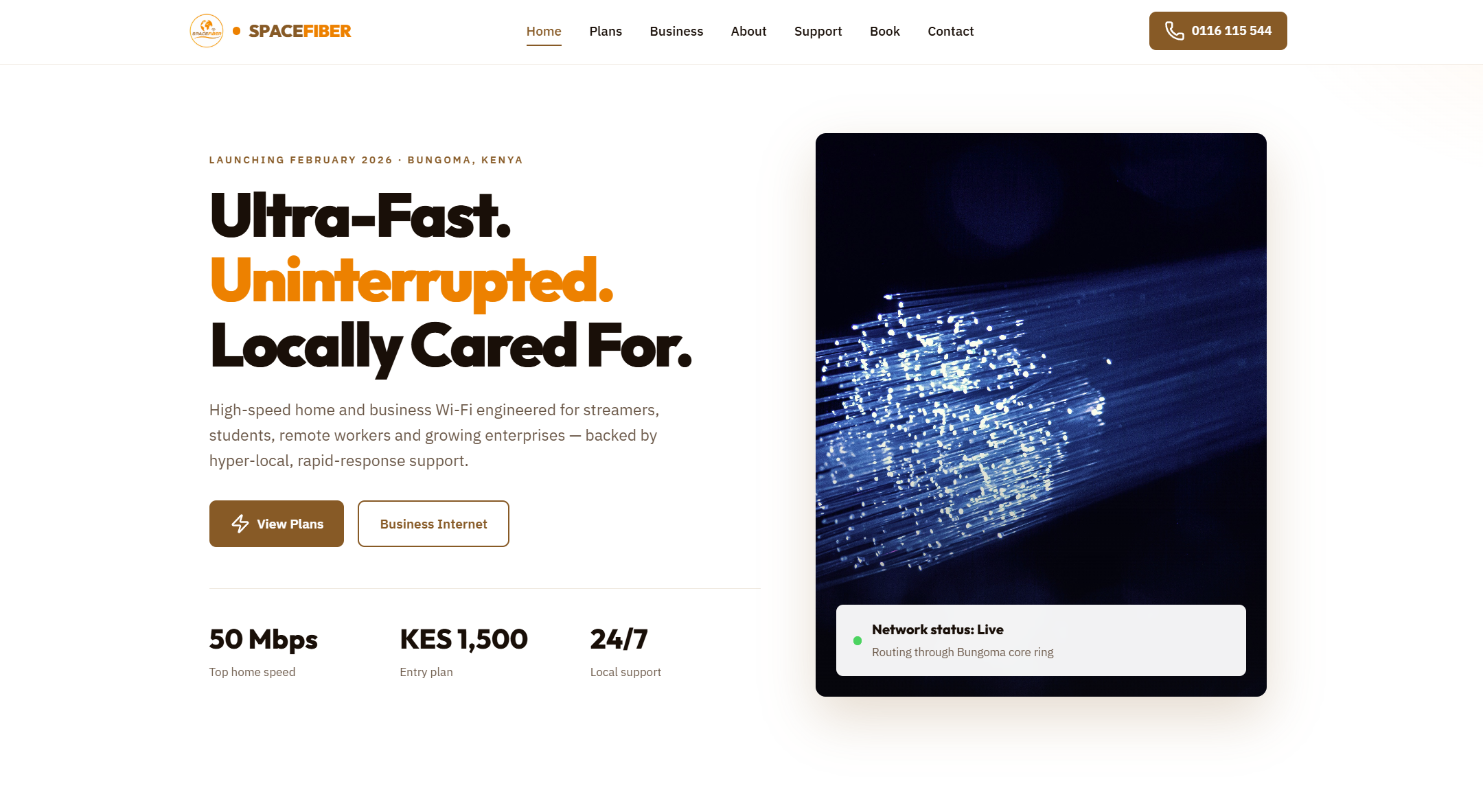
Project Overview
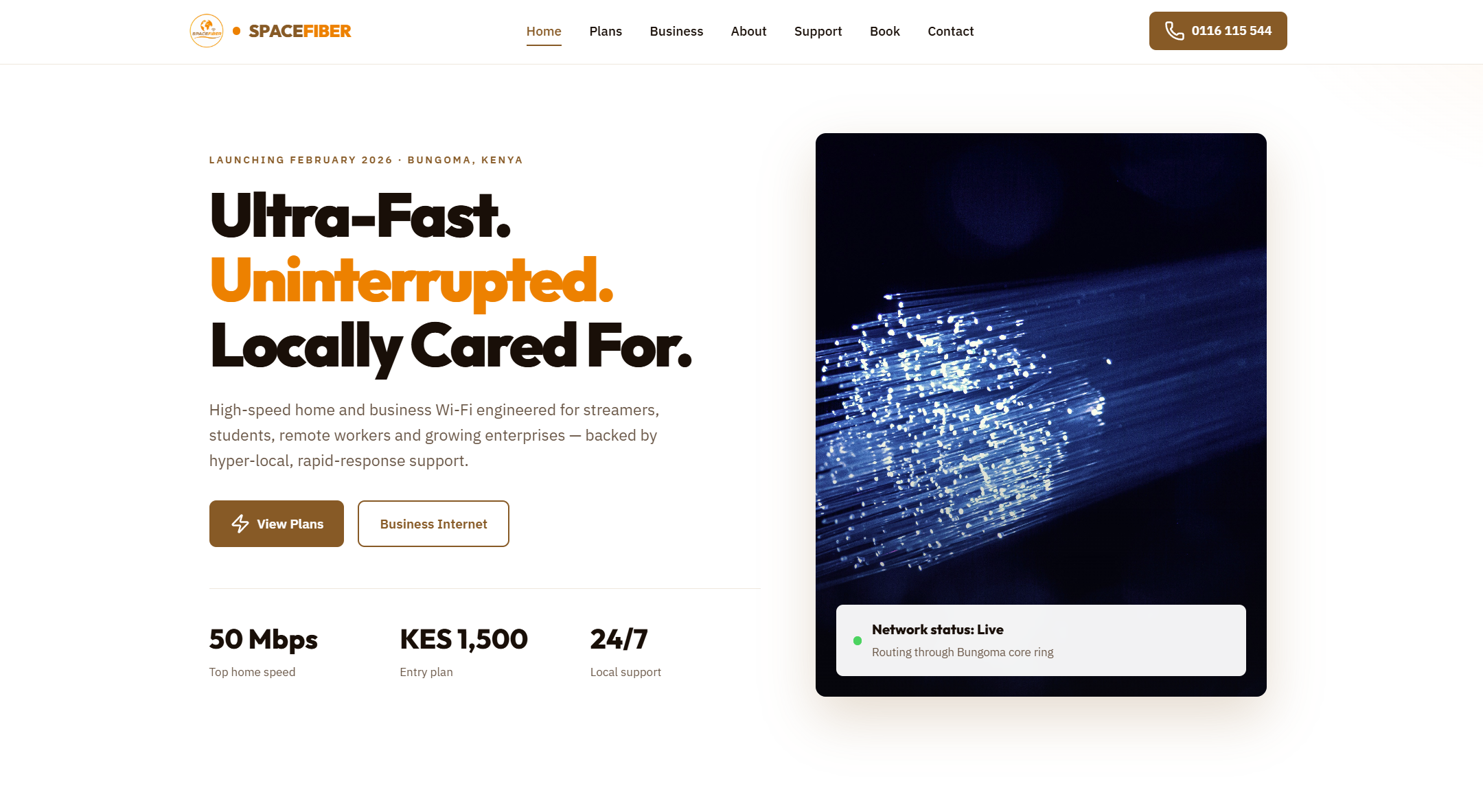
Space Fiber IT Solution for Bungoma was designed as a service-focused website for an internet and IT solutions provider targeting local customers. The goal was to create a professional online presence that clearly communicates services, builds trust, and makes it easy for potential clients to get in touch.
For a business in connectivity and IT support, the website needed to do more than look modern. It had to explain value quickly, highlight reliability, and support lead generation from both mobile and desktop users.
The Problem We Set Out to Solve
Many small and growing IT service providers face the same challenge: they offer useful services, but their online presence does not reflect their capabilities.
Common issues include:
- Unclear messaging
- Outdated visual design
- Poor mobile experience
- Slow page load times
- Missing calls to action
- Limited local search visibility
For Space Fiber IT Solution, the website needed to solve these issues while presenting the company as a dependable local provider in Bungoma.
Project Goals
The build was guided by a few practical business and user goals.
Business goals
- Establish a professional digital brand
- Showcase internet and IT-related services clearly
- Increase inquiries from local prospects
- Improve trust through a polished presentation
- Support discoverability in local search
User goals
- Understand what the company offers within seconds
- Find contact details easily
- Browse comfortably on mobile devices
- Identify whether the service area includes Bungoma and nearby locations
- Reach out without friction
Discovery and Planning
Before any design work started, the first step was to define the content structure and user journey.
Key planning questions included:
- Who is the primary audience?
- What services matter most to them?
- What questions do users ask before making contact?
- What information should appear above the fold?
- How can the site reduce hesitation and encourage inquiries?
From this, the site structure was simplified around the essentials:
- Home
- About
- Services
- Coverage or service area
- Contact
This structure keeps navigation intuitive and supports the main conversion path: visit, understand, trust, contact.
Information Architecture
A website for a local IT and fiber-related provider should not overwhelm users with technical detail. Instead, it should present information in layers.
The content hierarchy followed this logic:
- Immediate value proposition
- Core services
- Why choose the company
- Local relevance
- Contact and inquiry options
This approach helps first-time visitors answer the most important questions quickly:
- What does this company do?
- Is it available in my area?
- Can I trust them?
- How do I contact them?
Design Approach
The design direction focused on professionalism, speed, and readability.
Visual goals
- Clean layout with enough whitespace
- Strong headline and service-first messaging
- Modern color palette aligned with connectivity and technology
- Mobile-friendly sections with clear spacing
- Consistent buttons and action prompts
The design aimed to feel approachable rather than overly corporate. For local businesses, trust often comes from clarity and consistency more than flashy visuals.
UX decisions
Several interface choices were made to improve usability:
- A prominent hero section with a clear message
- Service cards for quick scanning
- Sticky or easy-to-find contact actions
- Short, readable content blocks
- Contact section designed for low-friction inquiries
This is especially important in regions where many users browse primarily on smartphones and may have limited patience for cluttered or slow interfaces.
Content Strategy
The website content needed to be straightforward and localized.
Instead of generic technology jargon, the copy focused on:
- Reliable internet and fiber-related services
- IT support and business solutions
- Fast communication and availability
- Service coverage in Bungoma
- Customer confidence and professionalism
Good service websites often fail because they describe features without explaining benefits. The content for this project emphasized outcomes users care about:
- Stable connectivity
- Faster support
- Professional setup
- Easy communication
- Local availability
Core Pages and Their Roles
Home
The homepage functions as the primary landing page and conversion entry point.
Its responsibilities include:
- Introduce the brand
- State the main services
- Build quick trust
- Direct users to contact or service details
A strong homepage usually includes:
- Hero section
- Short service overview
- Why choose us section
- Coverage or location mention
- Contact call to action
About
The about page helps humanize the brand.
For service businesses, users want to know:
- Who is behind the business
- What experience they have
- Whether they are credible
- If they understand local needs
This page is a trust layer, not just a company biography.
Services
The services page is where clarity matters most.
Each service should answer:
- What is offered?
- Who is it for?
- What problem does it solve?
- How does a client get started?
Breaking services into separate cards or sections improves scannability and helps users self-identify what they need.
Example structure:
Service Name
Short description
Key benefits
Ideal customer
Call to action
Coverage Area
For a location-based provider, service area information is essential.
Including Bungoma prominently supports:
- Local trust
- Geographic relevance
- Better user confidence
- Stronger local SEO signals
If the business serves nearby towns or neighborhoods, listing them can also help capture relevant searches.
Contact
The contact page is the final conversion step.
It should be simple and focused:
- Phone number
- Email address
- Contact form
- Physical location if applicable
- WhatsApp or direct messaging option
The best contact pages remove friction rather than adding unnecessary fields.
Technical Build Considerations
This project was not just about visual presentation. The technical build needed to support performance, responsiveness, and maintainability.
Key priorities
- Mobile-first responsiveness
- Lightweight assets
- Fast load times
- Clean semantic structure
- Clear navigation
- SEO-ready page markup
A service website often wins or loses leads based on simple technical quality. If the page loads slowly or feels broken on a phone, users leave.
Front-end focus areas
The implementation emphasized:
- Responsive grid layouts
- Optimized images
- Reusable UI sections
- Accessible color contrast
- Clear typographic hierarchy
Example of a simple service card structure:
<section class="services">
  <article class="service-card">
    <h3>Fiber Installation</h3>
    <p>Reliable connectivity solutions for homes and businesses in Bungoma.</p>
    <a href="#contact" class="btn">Request Service</a>
  </article>
</section>
A clean component structure makes future edits easier as the business grows.
Mobile-First Experience
This was a critical part of the build.
In many local markets, mobile traffic dominates. That means design decisions must begin with smaller screens, not be adapted later as an afterthought.
Important mobile considerations included:
- Large tap targets
- Readable font sizing
- Stacked content sections
- Minimal visual clutter
- Quick access to contact actions
A mobile-first site helps capture users who are searching while on the move and want answers immediately.
Performance Optimization
A local business site should feel fast even on weaker connections.
Optimization strategies included:
- Compressing and resizing images
- Reducing unnecessary scripts
- Avoiding bloated design elements
- Using efficient layout patterns
- Keeping content concise and focused
Performance supports both user experience and search visibility. Faster sites generally retain more visitors and improve conversion chances.
SEO Strategy for Local Visibility
Since this project serves a location-specific audience, local SEO was part of the design and content thinking.
Local SEO priorities
- Mention Bungoma naturally in headings and copy
- Use service-based page content
- Add clear business contact details
- Create descriptive metadata
- Structure content for readability and relevance
Examples of search intent this site can target:
- Fiber internet services in Bungoma
- IT solutions company in Bungoma
- Internet installation Bungoma
- Local IT support Bungoma
The goal is not keyword stuffing. It is aligning the site with how real users search.
Trust-Building Elements
Service businesses need visible trust signals.
This project considered several ways to increase confidence:
- Clean and consistent branding
- Clear service descriptions
- Professional contact information
- Local identity and coverage mention
- Simple, credible messaging
Additional trust features that can be added over time include:
- Testimonials
- Client logos
- Service guarantees
- FAQs
- Response time commitments
These can strengthen the website as the business scales.
Challenges in This Type of Project
Designing for a local IT and fiber business involves a few recurring challenges.
1. Balancing technical credibility with simplicity
The site must feel competent without overwhelming non-technical users.
2. Explaining services clearly
Users may not know the difference between fiber installation, IT support, networking, or managed services. The website should simplify those distinctions.
3. Building trust quickly
Visitors often decide within seconds whether a provider feels legitimate.
4. Making contact effortless
If users have to search for a phone number or navigate too many pages, conversions drop.
What Made This Build Effective
A few practical decisions made the final result stronger:
- Clear, localized messaging
- Focus on conversion over decoration
- Mobile-first layout planning
- Service-based content structure
- Fast and readable page design
The site was built around the business objective of generating inquiries, not just presenting information.
Lessons Learned
This project reinforces a simple truth about service business websites: effectiveness comes from clarity.
A strong website does not need to be complicated. It needs to answer the right questions fast:
- What do you offer?
- Where do you operate?
- Why should I trust you?
- How do I contact you?
When these answers are easy to find, the website becomes a practical business tool rather than just a digital brochure.
Opportunities for Future Improvements
As Space Fiber IT Solution grows, the website can expand with additional features such as:
- Dedicated pages for each service
- Customer testimonials
- FAQ section
- Blog for network and IT tips
- Online service request form
- Coverage map
- Live chat or WhatsApp integration
These enhancements can improve both search visibility and user conversion over time.
Final Thoughts
The Space Fiber IT Solution for Bungoma project is a strong example of designing with business purpose in mind. The website was built to communicate services clearly, support local visibility, and make customer contact easy.
For local IT and connectivity providers, a well-structured website is not optional. It is one of the most important trust and lead generation assets a business can have.
When design, content, performance, and local relevance work together, even a simple website can become a powerful growth tool.