
OSPF vs EIGRP: Choosing the Right Interior Routing Protocol
Both OSPF and EIGRP can route your internal network well — but they get there very differently. Here is a practical guide to picking the right one for your topology.
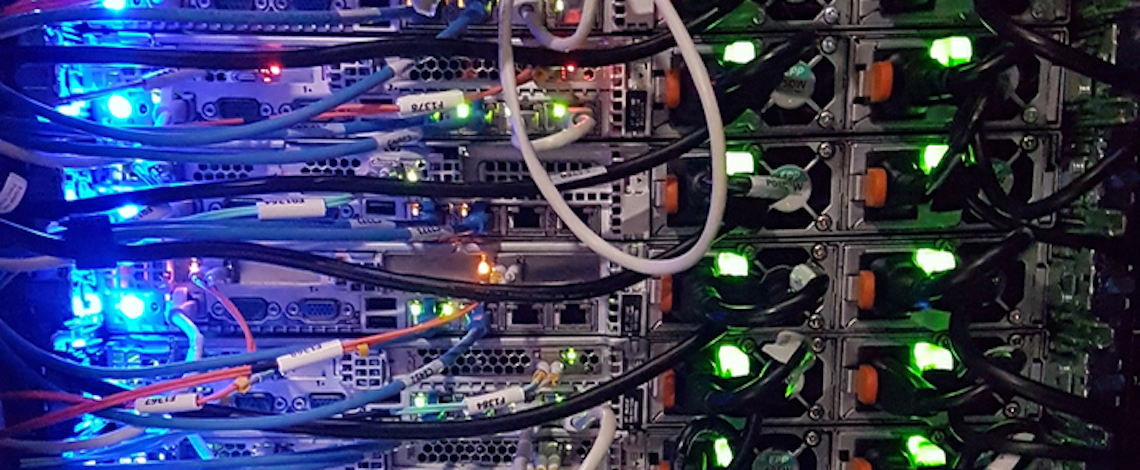
When you build a routed network beyond a couple of devices, you need a dynamic routing protocol so routers learn paths automatically instead of you hand-editing static routes every time something changes. Inside a single organization — an interior gateway protocol, or IGP — two names come up again and again: OSPF and EIGRP. Both are mature, both converge quickly, and both will happily run a serious enterprise network. They just get there in very different ways, and understanding those differences is what lets you choose with confidence instead of habit.
The 30-second summary
- OSPF (Open Shortest Path First) is an open-standard link-state protocol. Every router builds a complete map of its area and runs Dijkstra's algorithm to compute the shortest path to each destination. It is vendor-neutral and defined in public RFCs.
- EIGRP (Enhanced Interior Gateway Routing Protocol) is Cisco's advanced distance-vector protocol. It converges extremely fast, is simple to configure, and factors bandwidth and delay into its metric. Once Cisco-only, it is now partially published but still effectively a Cisco world.
How they think
This is the heart of the difference.
OSPF floods Link-State Advertisements (LSAs) so that every router in an area holds an identical topology database — a shared map. Each router then independently runs the SPF (Dijkstra) algorithm against that map to build its own shortest-path tree to every network. When a link changes, OSPF re-floods the affected LSA and the routers re-run SPF.
EIGRP never builds a full map. Each router keeps a topology table of routes advertised by its neighbours and, for each destination, tracks a successor (the best path) and, where possible, a feasible successor (a pre-qualified, loop-free backup). Its DUAL (Diffusing Update Algorithm) can switch to that backup almost instantly when the primary fails — with no recomputation of the whole topology.
The metric: how "best" is decided
The protocols even measure distance differently:
- OSPF cost is derived from bandwidth:
cost = reference-bandwidth / interface-bandwidth. The default reference bandwidth (100 Mbps) treats every link of 100 Mbps or faster as cost 1, so on modern networks you should raise it (auto-cost reference-bandwidth 100000) and set it the same on every router. - EIGRP uses a composite metric built mainly from the minimum bandwidth along the path and the cumulative delay, weighted by its "K-values." That makes EIGRP's path selection a little richer out of the box — and it natively supports unequal-cost load balancing via the
variancecommand, something OSPF cannot do.
One more practical detail is administrative distance, which decides the winner when both protocols advertise the same route: EIGRP internal routes have an AD of 90, OSPF is 110, and EIGRP external routes are 170. So on a router running both, internal EIGRP routes are preferred by default.
Configuration feel
OSPF asks you to place interfaces into areas:
router ospf 1
 router-id 1.1.1.1
 network 10.0.0.0 0.0.0.255 area 0
 auto-cost reference-bandwidth 100000
EIGRP is famously terse:
router eigrp 100
 network 10.0.0.0 0.0.0.255
 no auto-summary
That brevity is a real part of EIGRP's appeal on all-Cisco networks — but OSPF's explicit area model pays off as the network grows.
Scaling: areas vs summarization
OSPF scales through hierarchy. You split the network into areas that all attach to a backbone (area 0), and Area Border Routers (ABRs) summarise between them. This shrinks link-state databases, limits how far a flap propagates, and keeps SPF cheap. The price is design discipline — you have to plan your areas.
EIGRP scales through summarization and stub routing. You can summarise at any interface (ip summary-address eigrp) and mark edge routers as stubs so they are not dragged into route queries. This contains EIGRP's one classic weakness — "stuck in active" queries that can ripple across a flat network.
Side by side
| OSPF | EIGRP | |
|---|---|---|
| Type | Link-state | Advanced distance-vector |
| Standard | Open (multi-vendor) | Cisco (largely) |
| Metric | Bandwidth-based cost | Bandwidth + delay composite |
| Convergence | Re-run SPF | DUAL / feasible successor (near-instant) |
| Load balancing | Equal-cost only | Equal and unequal cost |
| Scaling model | Areas + ABR summarization | Summarize anywhere + stubs |
| Admin distance | 110 | 90 internal / 170 external |
When to reach for OSPF
- Mixed-vendor environments — OSPF runs on Cisco, Juniper, Arista and virtually everything else.
- Large hierarchical designs — multi-area OSPF with a clean backbone scales predictably.
- Standards and certifications — OSPF is the industry lingua franca, and the skill transfers everywhere.
When to reach for EIGRP
- All-Cisco networks where you want fast convergence with minimal tuning.
- Unequal-cost load balancing across links of different speeds.
- Simpler configuration for medium networks that do not need formal area design.
A quick lab to prove it
Spin up four routers in GNS3, run OSPF on one pair and EIGRP on the other, then pull a link and watch how each recovers:
show ip ospf neighbor
show ip eigrp topology
show ip route
You will see EIGRP's feasible successor take over almost instantly, while OSPF reconverges after re-flooding its LSAs and re-running SPF. Add a second, slower path and try variance on the EIGRP side to watch unequal-cost load balancing that OSPF simply will not do.
The honest answer
For most modern designs I lean toward OSPF for its portability and clean area model — it is the safer bet if your network is multi-vendor or you want skills that travel. But on an all-Cisco network that needs dead-simple, blisteringly fast convergence, EIGRP is genuinely hard to beat.
Pick the protocol that matches your hardware, your team's skills, and how big the network will grow — not the one that simply feels most familiar.

Inside a Firewall: How It Decides What Gets In and What Gets Dropped
View in portfolioMore in Networking
You might also like
Never miss a post
Get new cybersecurity and networking write-ups straight to your inbox. No spam — unsubscribe anytime.