
Building an Incident Response Playbook That Actually Works
A playbook you only write after an incident is a post-mortem. Here is how to build one before the alarm goes off — so your team acts calmly instead of scrambling.

The worst time to figure out who does what is in the middle of a breach. An incident response (IR) playbook turns panic into process — a shared script your team can follow calmly at 3 a.m. instead of improvising. Here's a practical structure you can adapt this week.
Follow a proven lifecycle
The NIST incident-handling model gives you a clean backbone:
- Preparation — tooling, contacts, and access ready before anything happens.
- Detection & Analysis — confirm it's real and scope the impact.
- Containment — stop the bleeding without destroying evidence.
- Eradication — remove the root cause.
- Recovery — restore services and monitor for recurrence.
- Lessons Learned — write down what worked and what didn't.
Define roles before you need them
In a real incident, ambiguity costs minutes you don't have. Assign these up front:
- Incident Commander — runs the response and makes the call; not necessarily the most technical person.
- Technical Lead — drives investigation and containment.
- Communications — handles internal updates and, if needed, customers/legal.
- Scribe — timestamps every action and decision.
Even a two-person team benefits from naming who wears which hat.
Preparation is 90% of the win
- Maintain an up-to-date contact tree: who to call, in what order, and their backups.
- Pre-stage access: a break-glass account, a jump host, and read-only log access.
- Know your crown jewels — the systems and data that must be protected first.
- Keep the playbook offline too — if identity or the network is down, a doc that lives only on the affected system is useless.
Detection & analysis
Define what "an incident" actually means so alerts don't get ignored. Tie each alert to a severity, and document the first three questions to answer:
- What asset is affected?
- Is the activity still ongoing?
- What is the likely entry point?
Establish severity levels (e.g., SEV-1 through SEV-3) with clear examples, so everyone escalates consistently.
Containment without regret
Isolate the host from the network, but capture volatile evidence first — memory, active connections, running processes. Snapshot before you wipe. Distinguish short-term containment (pull the host off the network now) from long-term (rebuild, rotate credentials, patch the entry point) so you buy time without tipping off the attacker prematurely.
# quick triage examples
netstat -antp
ps aux --sort=-%mem | head
Eradication and recovery
Remove the root cause — not just the symptom. Then restore from known-good backups, rotate any exposed credentials and keys, and watch closely for reinfection. Bring systems back in stages and keep detection dialed up on the affected assets for a while afterward.
The blameless retrospective
Hold a blameless post-mortem within a week, while memories are fresh. Focus on the process, not the person: What did we detect and when? Where did we lose time? What would make the next one faster? Capture concrete action items with owners and dates.
A good playbook is a living document. Every incident should make the next one less scary.
Measure what matters
Track two numbers over time and drive them down:
- MTTD — mean time to detect.
- MTTR — mean time to respond/recover.
They turn "we handled it" into evidence that your program is actually improving.
Rehearse with tabletops
Run tabletop exercises quarterly: walk through a realistic scenario ("ransomware on a file server," "phished exec account") and follow the playbook out loud. You'll find the gaps — a missing contact, an access assumption, an unclear owner — in a calm room instead of a live crisis.
Wrapping up
Write the playbook before the alarm goes off. Define the lifecycle, name the roles, over-invest in preparation, and rehearse. The muscle memory you build in a quiet conference room is exactly what saves you when it's real.
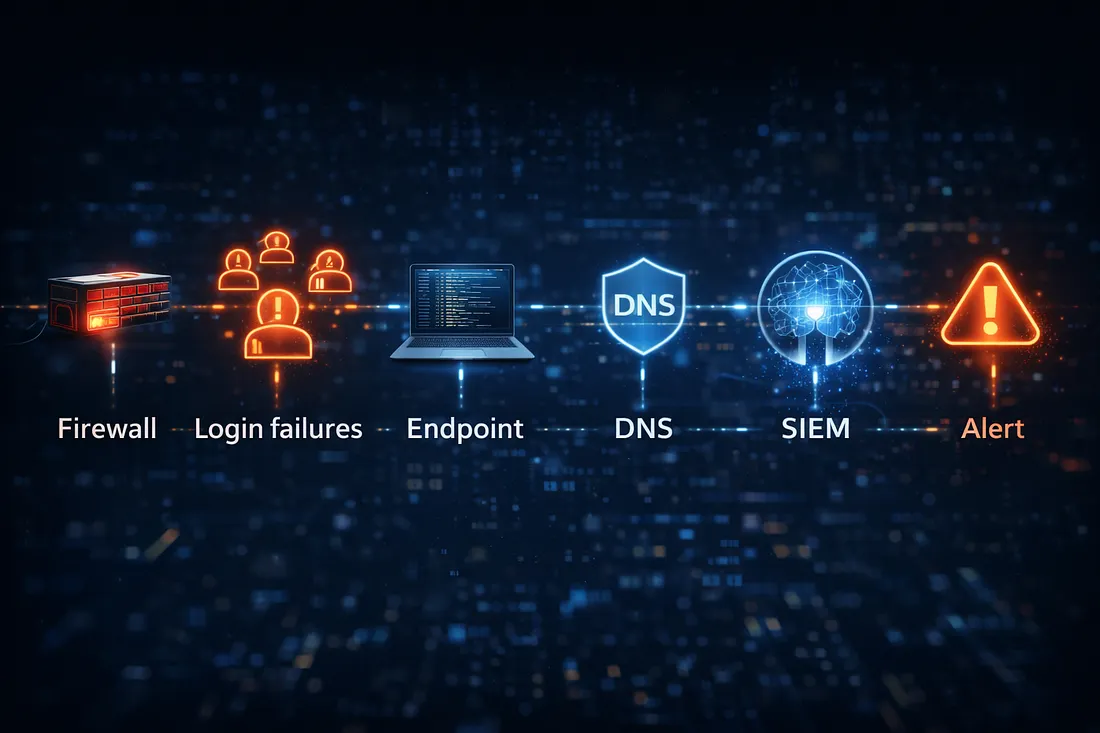
From Logs to Alerts: Getting Started with SIEM
View in portfolioMore in Cybersecurity


You might also like
Never miss a post
Get new cybersecurity and networking write-ups straight to your inbox. No spam — unsubscribe anytime.